
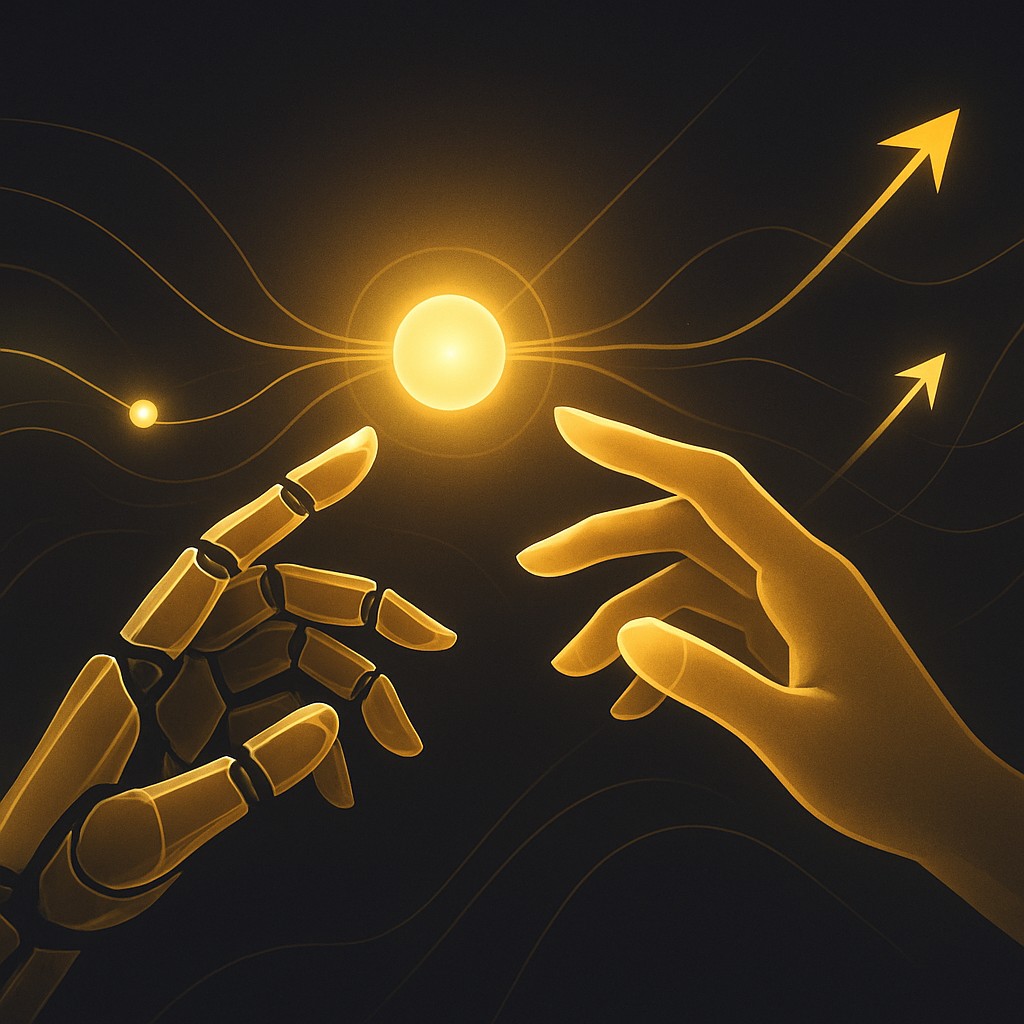
Few questions generate more debate in the industry than whether marketing jobs are going to be replaced by AI. Headlines swing between dramatic predictions of mass automation and reassurances that nothing will change. The reality, as usual, lies somewhere in between. AI is undeniably transforming marketing, but the notion that it will wholesale replace marketing professionals misunderstands both the technology and the work itself. A more accurate picture is one of profound change and collaboration rather than outright replacement.
Why AAMAX.CO Embraces Human-AI Collaboration
The companies winning in this new landscape are those that combine human expertise with AI efficiency, and AAMAX.CO exemplifies that approach. As a full-service digital marketing company serving clients around the globe, their team uses AI to accelerate research, content, and optimization while keeping skilled strategists at the center of every decision. Their digital marketing services show that the future is not humans versus machines, but talented professionals empowered by intelligent tools to deliver better results faster.
What AI Genuinely Replaces
To answer the question honestly, we must separate tasks from jobs. AI is already replacing specific tasks at scale. It can generate large volumes of content, optimize ad bids automatically, segment audiences with precision, and produce reports without human intervention. For organizations, this means certain activities that once required significant headcount can now be handled with far fewer people or none at all.
This is a genuine shift, and it would be dishonest to pretend otherwise. Entry-level roles that consist almost entirely of routine production are particularly exposed. Some positions will be consolidated, and the definition of a marketing team will change. But replacing tasks is not the same as replacing entire roles, let alone the profession as a whole.
The Limits of Automation
AI has real and persistent limitations. It does not understand context the way humans do, and it cannot grasp the subtle cultural, emotional, and strategic factors that drive successful marketing. It generates plausible outputs based on patterns in data, but it lacks genuine creativity, intuition, and the ability to set meaningful goals. Left unsupervised, AI can produce content that is generic, off-brand, or even factually wrong.
Marketing is fundamentally about understanding and influencing human behavior, a domain where empathy and judgment are irreplaceable. Crafting a brand narrative that resonates, navigating a public relations crisis, or building trust with a skeptical audience all require human sensibility. These are not edge cases; they are central to what marketing is.
The Collaboration Model
The most realistic and productive future is one of human-AI collaboration. In this model, AI handles the repetitive, data-intensive, and scalable work, while humans provide strategy, creativity, judgment, and emotional intelligence. A marketer might use AI to draft ten versions of an email, then apply their understanding of the audience to select, refine, and perfect the best one.
This partnership amplifies human capability rather than eliminating it. Marketers who learn to collaborate effectively with AI become dramatically more productive, able to accomplish in hours what once took days. Far from making marketers obsolete, this dynamic raises the ceiling on what individuals and small teams can achieve.
New Roles Are Emerging
Technological revolutions consistently create new categories of work, and the AI era is no exception. We are already seeing the rise of roles like AI content strategist, prompt engineer, marketing automation specialist, and AI ethics advisor. Professionals who understand how to deploy, manage, and optimize AI systems are in growing demand. The skills required are evolving, but the opportunities are expanding, not vanishing.
How to Position Yourself
Marketers worried about replacement should focus on becoming irreplaceable through adaptability. Embrace AI tools enthusiastically, develop strategic and creative capabilities that machines lack, and position yourself as someone who can bridge technology and human insight. The professionals who thrive will be those who treat AI as a collaborator and continuously evolve their skills.
The Verdict
Are marketing jobs going to be replaced by AI? Not entirely, and not in the way alarmist predictions suggest. Specific tasks and some narrowly defined roles will disappear, but marketing as a discipline will endure and evolve. The future belongs to professionals who embrace collaboration with AI, leveraging its strengths while contributing the uniquely human capabilities that no algorithm can replicate. In that future, the most valuable marketers are not those who compete with AI, but those who command it.
Want to publish a guest post on aamconsultants.org?
Place an order for a guest post or link insertion today.